
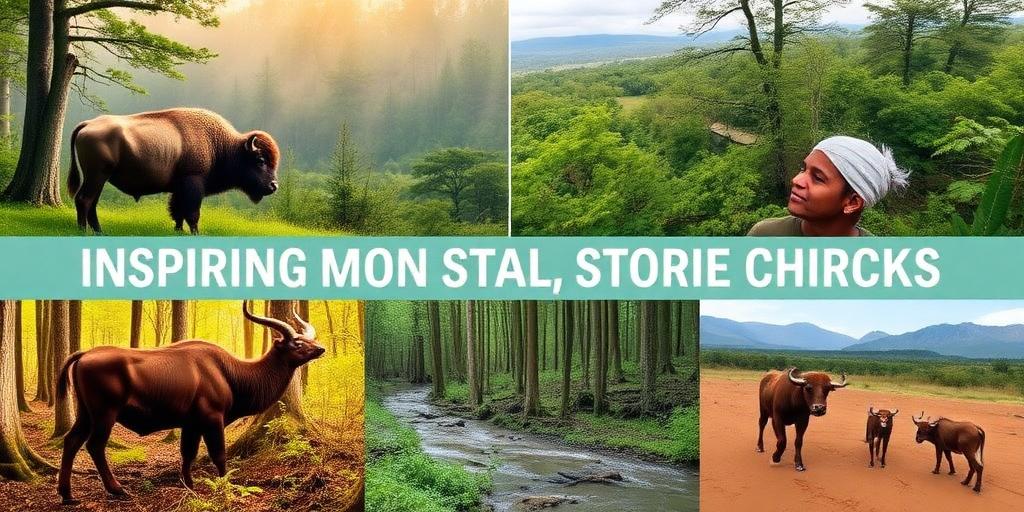
Hope for the Planet: Inspiring Environmental Success Stories
In a world often dominated by news of environmental degradation, it's easy to feel overwhelmed and pessimistic. However, it's crucial to remember that significant progress is being made in conservation and sustainability around the globe. This blog post highlights inspiring environmental success stories that demonstrate the power of human innovation, dedication, and collaboration in making a positive impact on our planet.
1. The Recovery of the European Bison
The European bison, or wisent, is Europe's largest land mammal. By the early 20th century, it had been hunted to extinction in the wild. Thanks to dedicated conservation efforts, including captive breeding programs and reintroduction projects, the European bison has made a remarkable comeback. Today, over 7,000 bison roam free in various European countries, a testament to the effectiveness of concerted conservation strategies.
2. The Reforestation of the Atlantic Forest
The Atlantic Forest in Brazil is one of the most biodiverse regions on Earth. It has suffered extensive deforestation due to agriculture, logging, and urbanization. However, organizations like the Instituto Terra, founded by photographer Sebastião Salgado and his wife Lélia Deluiz Wanick Salgado, have been working tirelessly to restore the forest. They have planted millions of trees, revitalizing degraded land and bringing back native flora and fauna. This project demonstrates the potential for large-scale reforestation to reverse environmental damage and enhance biodiversity.
3. The Montreal Protocol and the Ozone Layer
One of the most successful international environmental agreements, the Montreal Protocol, was established in 1987 to phase out ozone-depleting substances. The ozone layer protects the Earth from harmful ultraviolet radiation, and its depletion posed a significant threat to human health and ecosystems. Thanks to the Montreal Protocol, the ozone layer is now recovering, and scientists predict that it will return to pre-1980 levels by the middle of the 21st century. This success story illustrates the power of global cooperation in addressing environmental challenges.
4. The Revival of the River Thames
The River Thames, once declared biologically dead in the 1950s, has undergone a remarkable transformation. Decades of pollution from industrial waste and sewage had decimated its ecosystem. Through stringent regulations, investments in wastewater treatment, and dedicated cleanup efforts, the Thames is now a thriving river teeming with life. Fish populations have rebounded, and various bird species have returned to its banks. The revival of the River Thames showcases the potential for restoring urban waterways and creating healthier environments for both wildlife and people.
5. Community-Based Conservation in Namibia
Namibia has pioneered community-based natural resource management (CBNRM) programs, empowering local communities to manage and benefit from their natural resources. These initiatives have led to significant improvements in wildlife populations, reduced poaching, and enhanced livelihoods. By giving communities a stake in conservation, Namibia has demonstrated a sustainable model for protecting biodiversity while promoting economic development.
Conclusion
These environmental success stories offer a beacon of hope in the face of daunting challenges. They demonstrate that with dedication, innovation, and collaboration, we can reverse environmental damage, protect biodiversity, and create a more sustainable future for our planet. By learning from these examples and supporting similar initiatives, we can all contribute to a brighter, greener future.


