
The Future of Wireless Charging Technology for All Our Devices
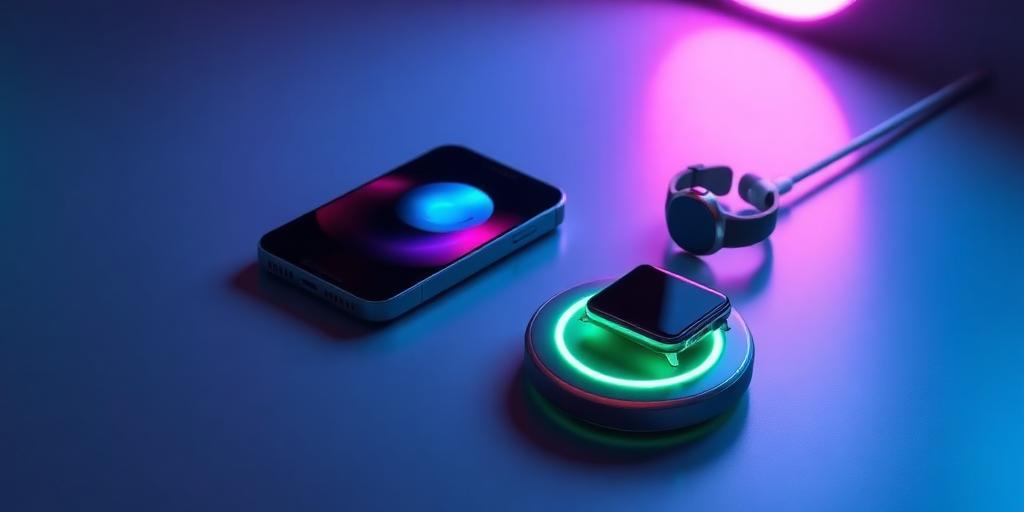
Wireless charging, once a novelty, is rapidly becoming a ubiquitous feature in our smartphones, smartwatches, and other consumer electronics. But what does the future hold for this technology? This post will explore the current state of wireless charging, emerging trends, and potential impacts on how we power our devices in the years to come.
Current Wireless Charging Technologies
The dominant standard today is Qi (pronounced "chee"), which uses inductive charging. Devices are placed on a charging pad, and energy is transferred via electromagnetic induction. While convenient, Qi charging has limitations in terms of speed and range. You typically need direct contact between the device and the charging pad for efficient power transfer.
Emerging Trends in Wireless Charging
Several exciting trends promise to revolutionize wireless charging:
- Higher Power Transfer: Current Qi charging typically maxes out at around 15W. However, newer standards and technologies are pushing towards faster wireless charging speeds, rivaling wired charging. Expect to see devices supporting 30W, 50W, or even higher wireless charging capabilities in the near future.
- Resonant Charging: Unlike inductive charging, resonant charging allows for power transfer over a greater distance. This means you could potentially charge your phone a few centimeters away from the charging source, offering more flexibility and convenience.
- Millimeter Wave (mmWave) Charging: mmWave technology, similar to what's used in 5G, can transmit power wirelessly over even longer distances. Imagine a future where your devices charge automatically as you walk into a room equipped with mmWave transmitters.
- Wireless Power Networks: Companies are exploring the idea of creating dedicated wireless power networks, similar to Wi-Fi networks, that can deliver power to multiple devices simultaneously within a specific area. This could eliminate the need for individual charging pads altogether.
Potential Impacts and Benefits
The widespread adoption of advanced wireless charging technologies has the potential to transform various aspects of our lives:
- Convenience: Wireless charging simplifies the charging process, eliminating the need for cables and adapters.
- Increased Device Lifespan: By reducing the wear and tear on charging ports, wireless charging can potentially extend the lifespan of our devices.
- Environmental Benefits: A universal wireless charging standard could reduce e-waste by eliminating the need for proprietary chargers.
- New Applications: Wireless charging can enable new applications in areas like electric vehicles, medical devices, and industrial equipment.
Challenges and Considerations
Despite the promising outlook, several challenges need to be addressed:
- Efficiency: Wireless charging is generally less efficient than wired charging, resulting in some energy loss.
- Cost: Advanced wireless charging technologies can be more expensive to implement than traditional wired charging.
- Safety: Ensuring the safety of high-power wireless charging systems is crucial to prevent potential risks.
- Standardization: Establishing a unified standard for wireless charging is essential for interoperability and consumer convenience.
Conclusion
The future of wireless charging is bright, with numerous technological advancements on the horizon. As these technologies mature and become more affordable, we can expect to see wireless charging become an integral part of our daily lives, powering our devices seamlessly and conveniently. While challenges remain, the potential benefits of wireless charging are too significant to ignore, paving the way for a truly wireless future.


