
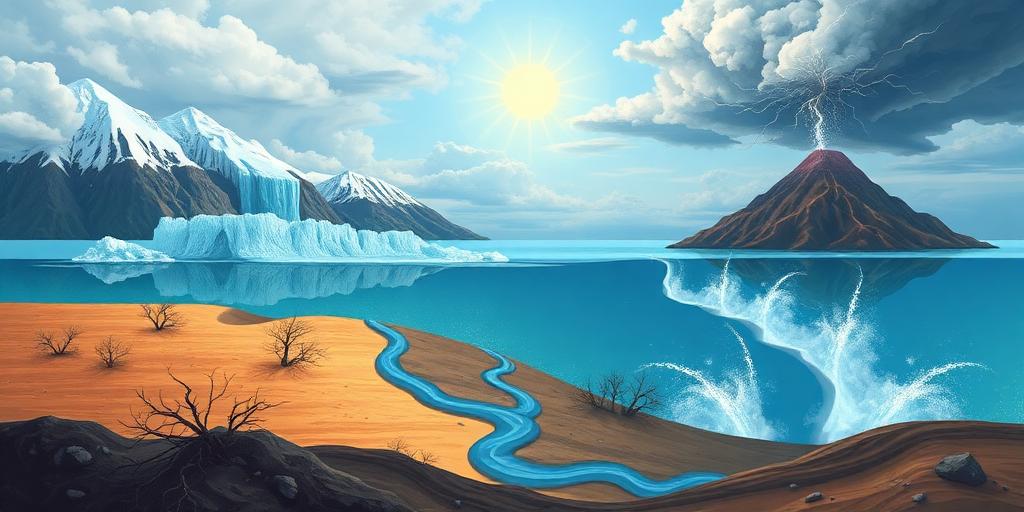
How Climate Change Affects Water Cycles
Climate change is significantly altering water cycles around the world, leading to more intense and frequent droughts, floods, and changes in precipitation patterns. Understanding these effects is crucial for adapting to and mitigating the impacts of climate change.
What is the Water Cycle?
The water cycle, also known as the hydrological cycle, describes the continuous movement of water on, above, and below the surface of the Earth. This cycle includes several key processes:
- Evaporation: The process by which water changes from a liquid to a gas (water vapor).
- Transpiration: The release of water vapor from plants into the atmosphere.
- Condensation: The process by which water vapor in the air changes into liquid water, forming clouds.
- Precipitation: Any form of water that falls from clouds, such as rain, snow, sleet, or hail.
- Infiltration: The process by which water on the ground surface enters the soil.
- Runoff: Water that flows over the land surface and into streams, rivers, and lakes.
Impacts of Climate Change on the Water Cycle
Increased Evaporation:
- Higher temperatures lead to increased evaporation from both land and water surfaces.
- This can result in drier soils and reduced water availability in many regions.
Changes in Precipitation Patterns:
- Climate change is causing shifts in precipitation patterns, with some areas experiencing more intense rainfall and others facing prolonged droughts.
- These changes can lead to increased risks of flooding and water scarcity.
Melting Ice and Snow:
- Rising temperatures are causing glaciers and snowpacks to melt at an accelerated rate.
- This melting contributes to sea-level rise and alters the timing and amount of water available for downstream communities.
More Intense Storms:
- Warmer ocean temperatures fuel more powerful storms, leading to increased rainfall and flooding.
- These extreme weather events can overwhelm water management infrastructure and cause significant damage.
Altered Soil Moisture:
- Changes in temperature and precipitation affect soil moisture levels, impacting agriculture and ecosystems.
- Drier soils can lead to reduced crop yields and increased wildfire risk.
Regional Variations
The impacts of climate change on water cycles vary by region:
- Coastal Areas: Sea-level rise and increased storm surges threaten freshwater resources through saltwater intrusion.
- Arid and Semi-Arid Regions: Increased evaporation and reduced rainfall exacerbate water scarcity.
- Mountainous Regions: Melting glaciers and snowpacks alter the timing and amount of water available for downstream users.
- Temperate Regions: Changes in precipitation patterns can lead to both increased flooding and drought risks.
Mitigation and Adaptation Strategies
Addressing the impacts of climate change on water cycles requires both mitigation and adaptation strategies:
- Mitigation: Reducing greenhouse gas emissions to slow down the rate of climate change.
- Adaptation: Implementing measures to manage the impacts of altered water cycles, such as:
- Improving water storage and conservation.
- Developing drought-resistant crops.
- Enhancing flood management infrastructure.
- Implementing water-efficient irrigation techniques.
Conclusion
Climate change is profoundly impacting water cycles around the world, with far-reaching consequences for ecosystems, agriculture, and human societies. By understanding these impacts and implementing effective mitigation and adaptation strategies, we can work towards a more sustainable and resilient future.


