
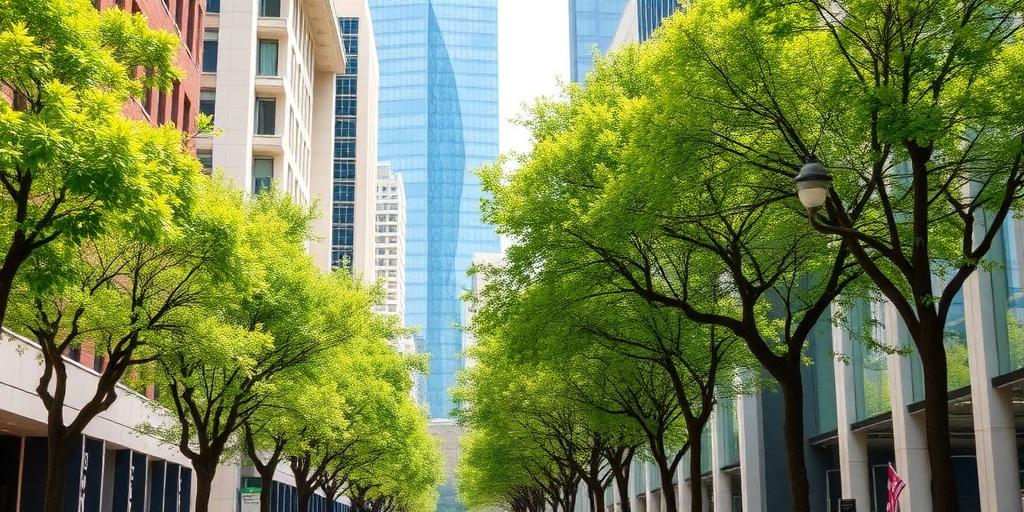
The Vital Role of Trees in Urban Environments
Urban environments, characterized by concrete structures and human activity, often seem far removed from nature. However, trees play an indispensable role in these settings, providing a multitude of benefits that enhance the quality of life for city dwellers. This article delves into the significance of trees in urban areas, exploring their ecological, social, and economic contributions.
Ecological Benefits
Trees are essential components of urban ecosystems, offering several ecological advantages:
- Air Purification: Trees absorb pollutants like nitrogen dioxide, sulfur dioxide, and particulate matter, improving air quality and reducing respiratory problems.
- Carbon Sequestration: Through photosynthesis, trees capture carbon dioxide, a major greenhouse gas, mitigating climate change.
- Temperature Regulation: Trees provide shade, reducing the urban heat island effect and lowering energy consumption for cooling.
- Water Management: Tree roots help absorb rainwater, reducing runoff and preventing soil erosion.
- Habitat Provision: Trees offer shelter and food for various species, promoting biodiversity in urban areas.
Social Benefits
Beyond their ecological functions, trees contribute significantly to the social well-being of urban communities:
- Aesthetic Enhancement: Trees beautify urban landscapes, creating more visually appealing and enjoyable environments.
- Recreational Opportunities: Parks and green spaces with trees provide areas for recreation, exercise, and relaxation.
- Stress Reduction: Studies have shown that exposure to trees and nature can reduce stress levels and improve mental health.
- Community Building: Trees can create a sense of place and foster community interaction in neighborhoods.
- Improved Public Health: Access to green spaces with trees encourages physical activity and reduces exposure to air pollution, contributing to better public health outcomes.
Economic Benefits
The presence of trees in urban environments also offers economic advantages:
- Increased Property Values: Properties located near trees and green spaces tend to have higher market values.
- Energy Savings: Trees provide shade, reducing the need for air conditioning and lowering energy costs.
- Reduced Healthcare Costs: Improved air quality and stress reduction can lead to lower healthcare expenditures.
- Tourism Revenue: Parks and green spaces attract tourists, boosting local economies.
- Stormwater Management Cost Savings: Trees reduce stormwater runoff, decreasing the need for expensive drainage infrastructure.
Challenges and Solutions
Despite their numerous benefits, trees in urban environments face various challenges:
- Limited Space: Urban areas often have limited space for tree planting and growth.
- Soil Compaction: Compacted soils restrict root growth and water infiltration.
- Pollution: Exposure to air and soil pollution can harm tree health.
- Vandalism: Trees are sometimes subject to vandalism, which can damage or kill them.
To overcome these challenges, cities can implement various strategies:
- Strategic Planning: Integrate trees into urban planning and development projects.
- Soil Improvement: Amend compacted soils to improve drainage and nutrient availability.
- Pollution Control: Implement measures to reduce air and soil pollution.
- Community Engagement: Involve local communities in tree planting and maintenance efforts.
- Tree Protection Policies: Enact policies to protect trees from damage and removal.
Conclusion
Trees are vital components of urban environments, providing a wide range of ecological, social, and economic benefits. By recognizing and addressing the challenges that trees face in urban areas, cities can create more sustainable, livable, and resilient communities. Investing in urban forestry is an investment in the health and well-being of present and future generations.


