
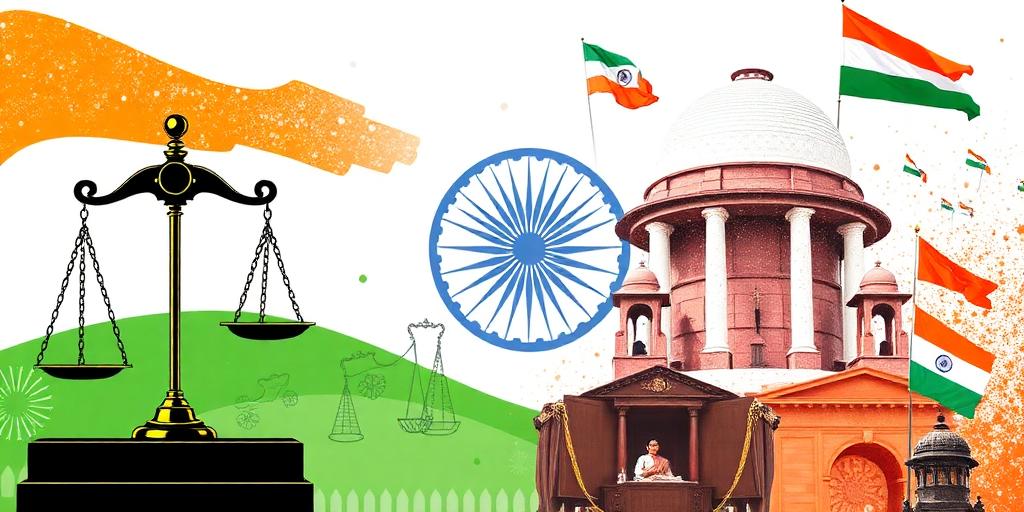
The Impact of Judicial Activism on Indian Politics
Judicial activism, a term frequently encountered in discussions of Indian politics, refers to the judiciary's proactive role in interpreting and shaping laws, often intervening in matters traditionally considered the domain of the executive and legislative branches. This intervention can take various forms, including public interest litigations (PILs), suo moto cognizance of issues, and expansive interpretations of constitutional provisions. Understanding its impact requires a nuanced examination of its multifaceted consequences.
Defining Judicial Activism in the Indian Context
Judicial activism is not explicitly defined in the Indian Constitution, yet its practice has evolved significantly since the 1970s. It is generally understood as the judiciary's willingness to step beyond its conventional role of merely interpreting laws and instead actively engaging in promoting social justice and upholding constitutional values. This is often justified on the grounds that the executive and legislative branches have failed to adequately address pressing social, economic, and environmental issues.
Historical Evolution of Judicial Activism
The roots of judicial activism in India can be traced back to the Emergency period (1975-1977), a time when fundamental rights were suspended, and the judiciary's role was largely diminished. In the aftermath of the Emergency, the judiciary sought to reassert its independence and protect citizens' rights more vigorously. Justice V.R. Krishna Iyer and Justice P.N. Bhagwati are often credited with pioneering the concept of PILs, which allowed ordinary citizens and social organizations to approach the courts on behalf of marginalized groups and for matters of public interest.
Positive Impacts of Judicial Activism
Judicial activism has had several positive impacts on Indian politics and society:
- Protection of Fundamental Rights: The judiciary has played a crucial role in safeguarding fundamental rights, particularly those of marginalized communities. Landmark cases such as Maneka Gandhi v. Union of India (1978) and Olga Tellis v. Bombay Municipal Corporation (1985) expanded the scope of Article 21 (Right to Life) and ensured greater protection for individual liberties.
- Environmental Protection: The courts have actively intervened in environmental matters, issuing directives to protect forests, rivers, and wildlife. The Ganga Action Plan, for example, was initiated following judicial intervention to clean up the polluted Ganges River.
- Combating Corruption: The judiciary has taken suo moto cognizance of corruption cases and directed investigations, holding public officials accountable. Cases like the 2G spectrum allocation scam and the coal block allocation scam saw significant judicial oversight, leading to greater transparency and accountability.
- Promoting Good Governance: Through PILs and other interventions, the judiciary has compelled the government to improve public services, implement welfare schemes effectively, and address grievances of citizens.
Criticisms and Concerns
Despite its positive contributions, judicial activism has also faced criticism:
- Judicial Overreach: Critics argue that the judiciary sometimes oversteps its mandate and encroaches upon the powers of the executive and legislative branches, violating the principle of separation of powers. This can lead to policy uncertainty and administrative paralysis.
- Lack of Accountability: Unlike elected representatives, judges are not directly accountable to the public. This raises concerns about the legitimacy of judicial interventions, especially when they involve policy-making.
- Inconsistency and Subjectivity: Judicial decisions can sometimes be inconsistent and influenced by the personal ideologies of judges. This can lead to uncertainty in the interpretation and application of laws.
- Delay and Pendency of Cases: The increased workload due to PILs and other forms of judicial activism has contributed to the already overburdened judicial system, leading to delays in the resolution of cases.
Case Studies: Examples of Judicial Activism
- Vishaka Guidelines: In Vishaka v. State of Rajasthan (1997), the Supreme Court issued guidelines to prevent sexual harassment in the workplace. These guidelines were later codified into law, demonstrating the judiciary's role in shaping legislation.
- Environmental Cases: The courts have actively intervened in cases related to deforestation, pollution, and mining, issuing directives to protect the environment and ensure sustainable development.
- Right to Education: The judiciary played a significant role in recognizing the right to education as a fundamental right under Article 21A of the Constitution, leading to the enactment of the Right to Education Act in 2009.
The Way Forward
While judicial activism has been instrumental in promoting social justice and good governance in India, it is essential to strike a balance between judicial intervention and the separation of powers. The judiciary should exercise restraint and avoid venturing into policy-making domains that are best left to the elected representatives. At the same time, it must remain vigilant in protecting fundamental rights and holding the executive and legislative branches accountable.
Conclusion
Judicial activism has significantly shaped Indian politics, serving as a check on executive and legislative actions and promoting social justice. However, it is crucial to address the concerns related to judicial overreach and ensure that the judiciary functions within its constitutional boundaries. A balanced approach that respects the separation of powers while upholding constitutional values is essential for the healthy functioning of Indian democracy. Understanding its nuances is vital for anyone studying Indian politics and constitutional law.


