
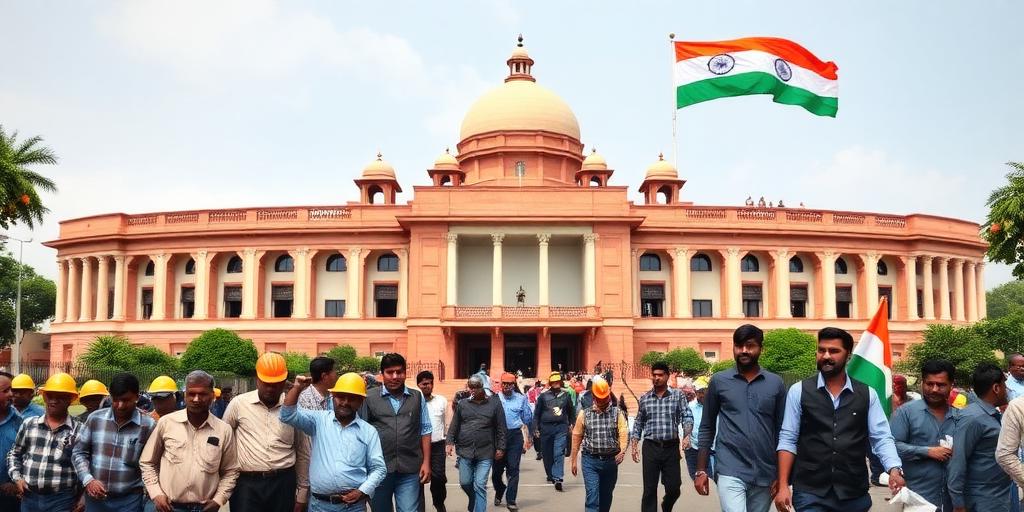
The Politics of Labour Reforms in India
India's labour reforms are a complex interplay of economic needs, social justice, and political considerations. These reforms aim to modernize labour laws, enhance productivity, and boost economic growth. However, they often face significant political opposition due to concerns about job security, worker welfare, and the balance of power between employers and employees.
Historical Context
India's labour laws have evolved since independence, with the Industrial Disputes Act of 1947 and the Factories Act of 1948 forming the bedrock. These laws, while providing a framework for worker protection, have been criticized for being rigid and outdated. They are often seen as hindering industrial growth and discouraging investment. The need for reform has been debated for decades, but progress has been slow due to strong political resistance.
Key Reform Initiatives
Recent reform initiatives have focused on consolidating and simplifying existing labour laws into four codes:
- The Code on Wages, 2019: This code aims to ensure minimum wages and timely payment of wages to all workers.
- The Code on Industrial Relations, 2020: This code deals with trade unions, conditions of employment, and industrial disputes.
- The Code on Social Security, 2020: This code focuses on providing social security benefits to workers, including healthcare, insurance, and pensions.
- The Code on Occupational Safety, Health and Working Conditions, 2020: This code aims to ensure a safe and healthy working environment for all workers.
Political Challenges
The implementation of these codes has faced significant political challenges:
- Trade Union Opposition: Trade unions fear that the reforms will dilute worker rights and weaken their bargaining power. They argue that the reforms favor employers and will lead to increased exploitation of workers.
- State Government Resistance: Labour is a concurrent subject in India, meaning both the central and state governments can legislate on it. Some state governments have been reluctant to implement the reforms, citing concerns about their impact on local industries and workers.
- Political Ideologies: Differing political ideologies also play a significant role. Left-leaning parties often oppose reforms that they perceive as pro-business, while right-leaning parties tend to support reforms that promote economic growth and investment.
Economic and Social Implications
These labour reforms have far-reaching economic and social implications:
- Economic Growth: Proponents argue that the reforms will attract investment, boost manufacturing, and create jobs. By making it easier to do business, they aim to enhance India's competitiveness in the global market.
- Worker Welfare: Critics argue that the reforms could lead to job losses, reduced wages, and increased job insecurity. They fear that the focus on flexibility will come at the expense of worker rights and social justice.
- Social Harmony: The reforms have the potential to exacerbate social tensions if they are not implemented fairly and equitably. It is crucial to ensure that the benefits of economic growth are shared by all sections of society.
Conclusion
The politics of labour reforms in India is a complex and contested arena. While the reforms are intended to modernize the labour market and boost economic growth, they face significant political opposition due to concerns about worker welfare and social justice. Successful implementation requires a balanced approach that addresses the needs of both employers and employees, while also taking into account the diverse political landscape of the country.


