
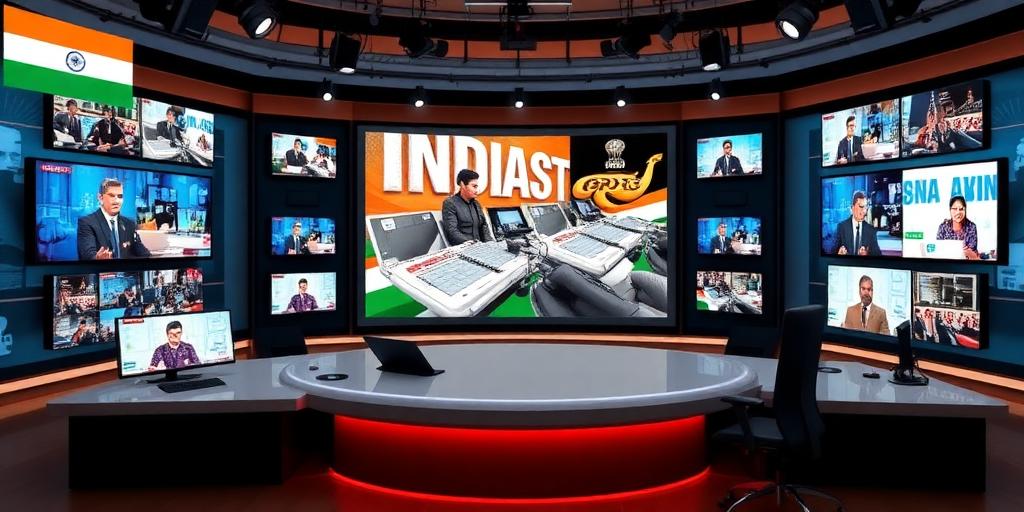
The Politics of Media Ownership in India
Media ownership in India is a complex and increasingly contentious issue, deeply intertwined with the nation's political landscape. The structure of media ownership has significant implications for the diversity of voices, the quality of information, and the overall health of India's democracy. This post delves into the various aspects of media ownership, its evolution, and its impact on the country's socio-political fabric.
Historical Context
Historically, media ownership in India was characterized by a mix of public and private entities. The state-owned Doordarshan and All India Radio dominated the broadcasting sector for decades, while print media was largely in the hands of private individuals and business houses. The liberalization of the Indian economy in the 1990s brought about significant changes, opening up the media sector to private and foreign investment.
Current Landscape
Today, the Indian media landscape is dominated by a few large conglomerates with interests spanning across print, television, and digital platforms. These groups often have close ties to political parties, raising concerns about biased reporting and the suppression of dissenting voices. The ownership patterns reveal a concentration of power in the hands of a few influential families and corporations.
Key Players
Several major players dominate the Indian media scene. These include:
- Network 18: Controlled by Reliance Industries, one of India's largest conglomerates.
- The Times Group: Owns The Times of India and a variety of other publications and channels.
- Zee Entertainment Enterprises: A major player in the television broadcasting sector.
- Sun TV Network: Dominates the South Indian media market.
These entities wield considerable influence over public opinion and the national discourse.
Regulatory Framework
The regulatory framework governing media ownership in India is somewhat fragmented. The Press Council of India oversees the print media, while the Ministry of Information and Broadcasting regulates the broadcasting sector. However, there is no single, comprehensive law that addresses the issue of media ownership concentration. Various committees and commissions have recommended reforms to promote media pluralism and prevent monopolies, but progress has been slow.
Concerns and Criticisms
Several concerns have been raised regarding the current state of media ownership in India:
- Lack of Diversity: Concentration of ownership limits the diversity of perspectives and can lead to homogenization of content.
- Political Influence: Media houses with close ties to political parties may prioritize political agendas over journalistic ethics.
- Bias and Propaganda: Ownership can influence reporting, leading to biased coverage and the spread of propaganda.
- Suppression of Dissent: Critical voices and investigative journalism may be suppressed to protect the interests of owners.
- Impact on Democracy: A skewed media landscape can undermine the principles of democracy by limiting informed public discourse.
Case Studies
Several instances highlight the impact of media ownership on reporting and public perception. For example, during elections, media houses have been accused of biased coverage in favor of certain political parties. Similarly, investigative reports on corporate malfeasance have sometimes been suppressed due to the owners' business interests.
The Way Forward
Addressing the challenges posed by media ownership concentration requires a multi-pronged approach:
- Strengthening Regulatory Framework: Enacting a comprehensive law to regulate media ownership and prevent monopolies.
- Promoting Transparency: Requiring media companies to disclose their ownership structures and financial interests.
- Encouraging Independent Media: Supporting independent media outlets and journalists who are committed to unbiased reporting.
- Empowering Citizens: Educating citizens about media literacy and critical thinking to enable them to discern credible information.
- Promoting Public Service Broadcasting: Strengthening public service broadcasters like Doordarshan to provide a platform for diverse voices.
Conclusion
The politics of media ownership in India is a critical issue that demands attention from policymakers, media professionals, and citizens alike. Ensuring a diverse, independent, and accountable media is essential for safeguarding democracy and promoting informed public discourse. By addressing the challenges of ownership concentration and promoting media pluralism, India can strengthen its democratic foundations and foster a more vibrant and inclusive society.


